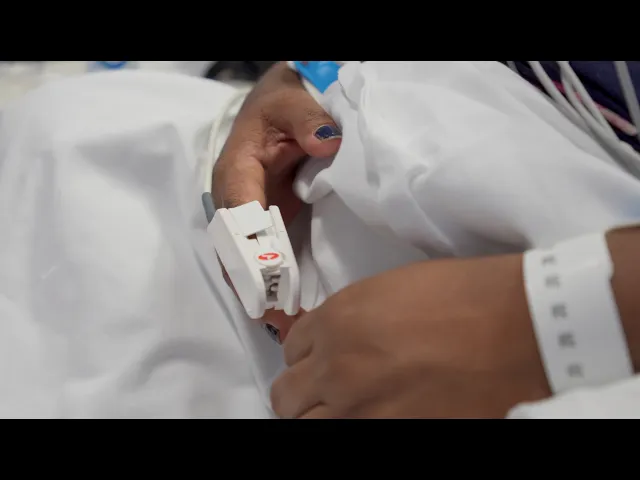
Brighter Lives: Shine Lawyers Palm Island Donor Visit
Brighter Lives funds equipment for health services across North Queensland. Shine Lawyers had raised money across two golf days and that money paid for physiological monitors at the Joyce Palmer Health Service on Palm Island.
The foundation asked us to document a visit to see these new monitors in operation. Donors were visiting to see what their money had bought and the film needed to show the equipment working, the people using it and what changed because of it. It also had to be something the foundation could put back in front of that donor and in front of the next one.
One day and five hours on the ground. The flight landed at 10:08 and left at 3:00. Inside that window sat a council meeting, a facility tour, a visit to a maternal health program and a scheduled interview slot of about thirty minutes that ran against everyone's lunch. There was no second day and no coming back.
Weight-restricted aircraft. Hinterland Aviation weighs passengers and baggage at check-in. Kit had to be decided before I left Townsville and it had to be small enough to carry alone between four locations on the island.
An operating health service. Joyce Palmer is a working Queensland Health facility, not a set. The nurses being interviewed had patients. The tour moved at the pace of a live ward.
A community with a specific history. Palm Island is one of the largest discrete Aboriginal communities in Australia. I was there as a guest of the foundation, on a program the foundation and the council had arranged. My job was to work inside those arrangements, not around them, and to be someone the foundation could bring back.
Senior people, limited time. The travelling party included the foundation's CEO and Chair and two senior representatives from the donor firm. None of them were there to be managed by a videographer.


The kit was cut to what one person could carry and set up in under two minutes, because in a five hour window the setup time is the thing that costs you material.
The interview slot was thirty minutes and shared with lunch. I prepared questions in advance from the background material the foundation provided, so that the time on the ground went to answers rather than working out what to ask. Interviews were filmed where the staff already were.
Everything else was covered as it happened. The council meeting, the facility tour, the maternal health program and the equipment itself were all shot around the schedule rather than interrupting it. Nothing on the runsheet was delayed to accommodate filming, and the party made the 3:00 flight.
Consent and community permissions were arranged through the foundation and the health service. I worked to what had been agreed and did not ask for access beyond it.
I hold my own insurance and have experience on restricted operational sites. Nobody on that trip had to supervise me.
A three-minute film and a sixty-second cut, each delivered in landscape and portrait. Plus a clean version with no titles, no name supers and no music, for supply to news outlets.
Five versions from five hours on the ground. The portrait cuts matter for a foundation that does most of its donor and community communication on social and they are the reason the coverage had to be planned for two aspect ratios while it was being shot.
The clean version exists because a story like this gets picked up. News outlets cannot run a piece carrying someone else's titles and music.
The material covers the monitors in use, the nursing staff who use them and what changed about how patients are moved out of Emergency and kept under observation.
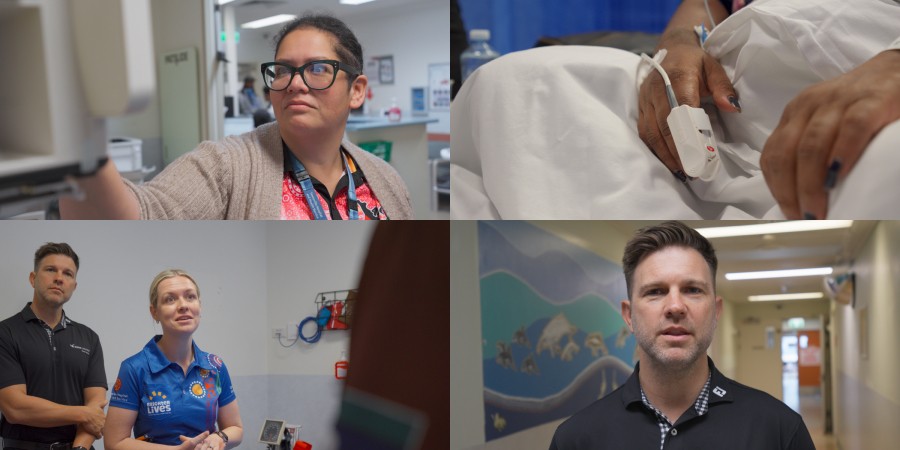
This is the reference point for work where you get one window and it will not be repeated. A remote site, a fixed return flight, a live clinical environment, a community with its own protocols, and senior stakeholders whose time is scarce.
The production has to fit inside all of that and still come back with something usable.
I film this kind of work across North Queensland. If you have a site visit, a remote program or a donor trip coming up, the useful conversation is about access and timing before anyone talks about deliverables.